

Knee Pain Guide
When your knee hurts, you want to encourage your body to send more blood to the area that hurts. Fresh blood brings with it white blood cells to ‘eat’ away damaged cell material, and red blood cells bring more ‘fresh food’ for your knee. Massaging the area also helps loosen connective tissues, also known as fascia, in the area.
Acupressure for knee pain: video demonstrations

Gentle acupressure techniques for knee pain
Before you begin
Use a fingertip or thumb to apply comfortable, gentle pressure. Massage in small circles. Pressure may feel mildly tender, but should never be sharp or intensely painful. Compare how the area feels before and after. Stop if symptoms worsen.
1. Pain on the outside of the knee
Find GB-34 (Yanglingquan) just below the outside of the knee, slightly forward and below the head of the fibula. Gently check whether the area is tender.
Next, find GB-41 (Zulinqi) on top of the foot, between the 4th and 5th metatarsal bones. Massage GB-41 in small circles for 10–15 seconds. Recheck the tenderness near GB-34. If it feels better, gently massage both GB-34 and GB-41 for another 15 seconds.
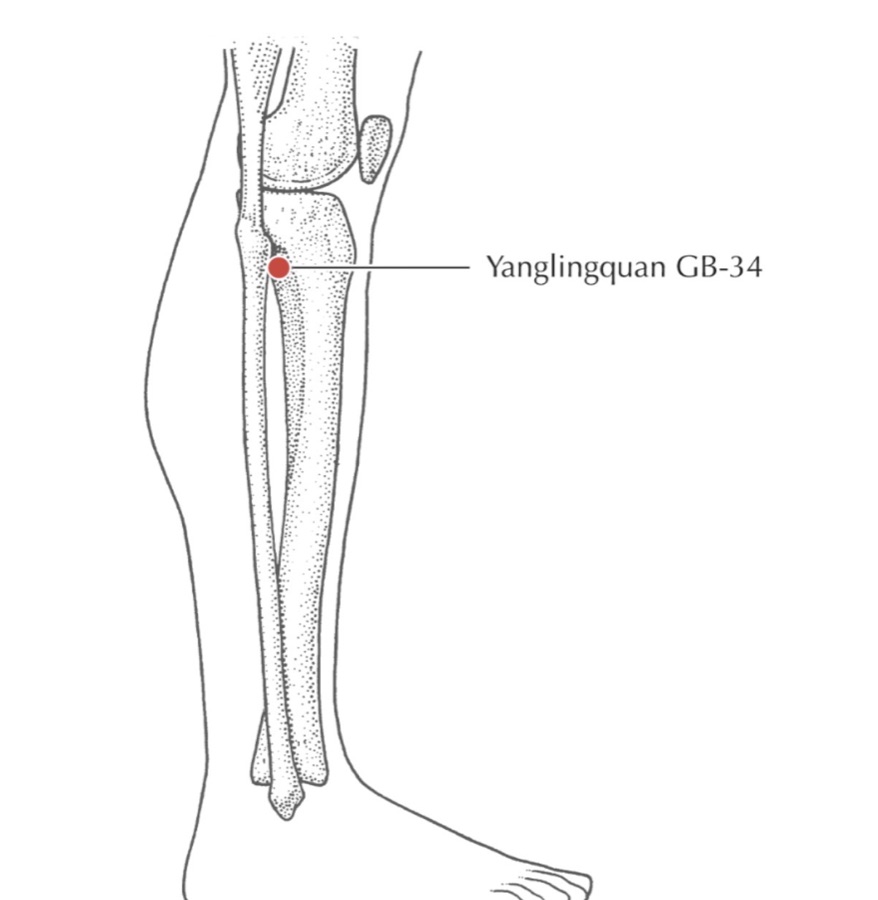
GB-34 · Outside of knee
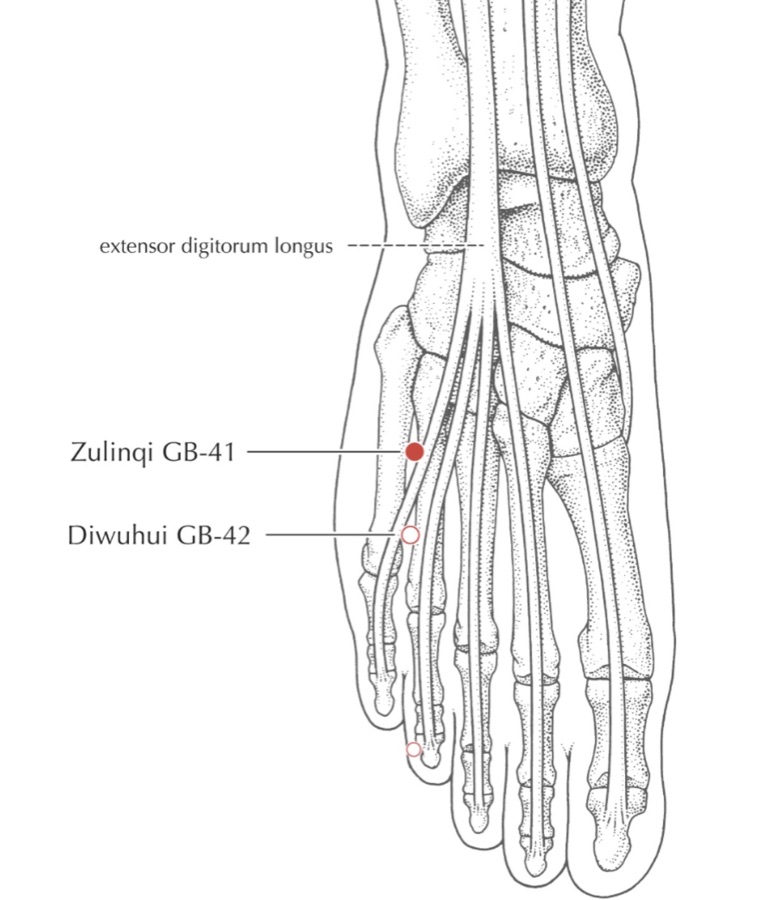
GB-41 · Top of foot
2. Pain on the inside of the knee
Find LV-8 (Ququan) near the inner end of the knee crease, with the knee comfortably bent. Check gently for tenderness.
Then find LV-3 (Taichong) on top of the foot, in the hollow between the 1st and 2nd metatarsal bones. Massage LV-3 in circles for 10–15 seconds. Recheck LV-8. If the tenderness has eased, gently massage LV-8 and LV-3 for another 10–15 seconds.
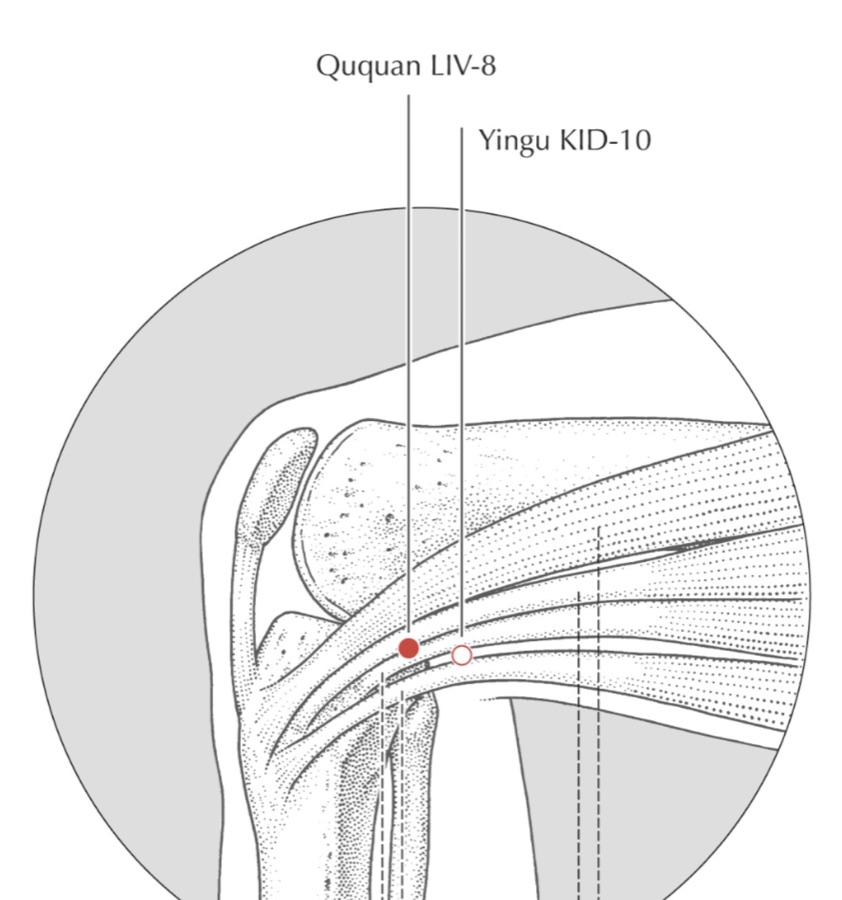
LV-8 · Inner knee
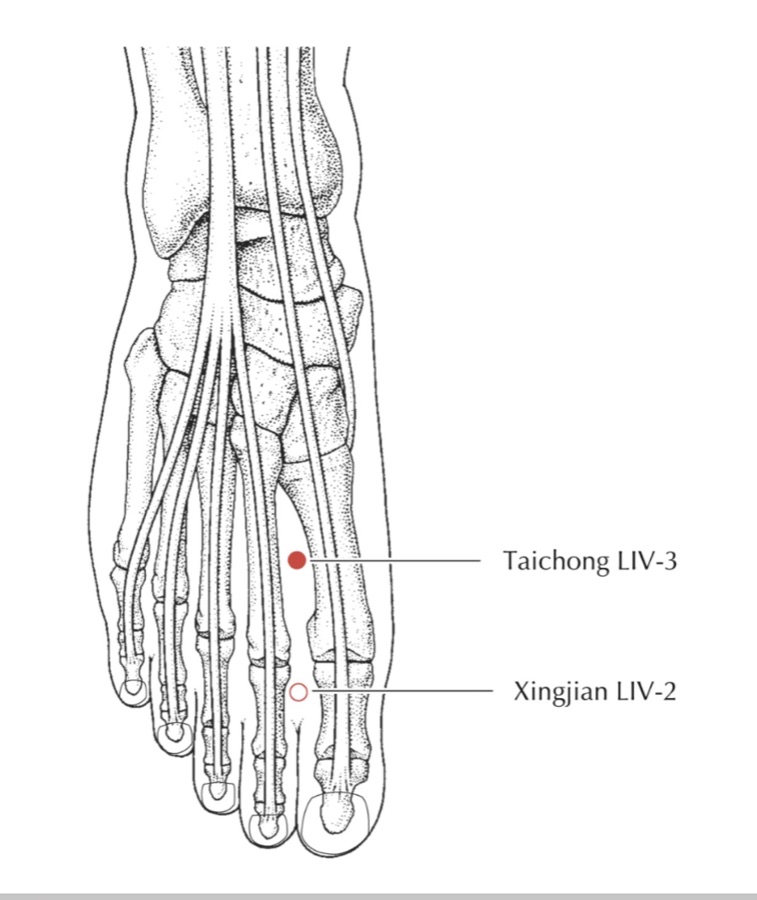
LV-3 · Top of foot
3. Pain at the front of the knee, around the kneecap
Bend your knee to a comfortable angle. Locate the 2 small hollows immediately below the kneecap, on either side of the patellar ligament. These are the medial and lateral Xiyan points, often called the “eyes of the knee.”
Then locate Heding (M-LE-27), in the depression at the midpoint just above the upper edge of the kneecap. Gently massage all 3 points for about 30 seconds total, avoiding painful pressure directly on the kneecap.
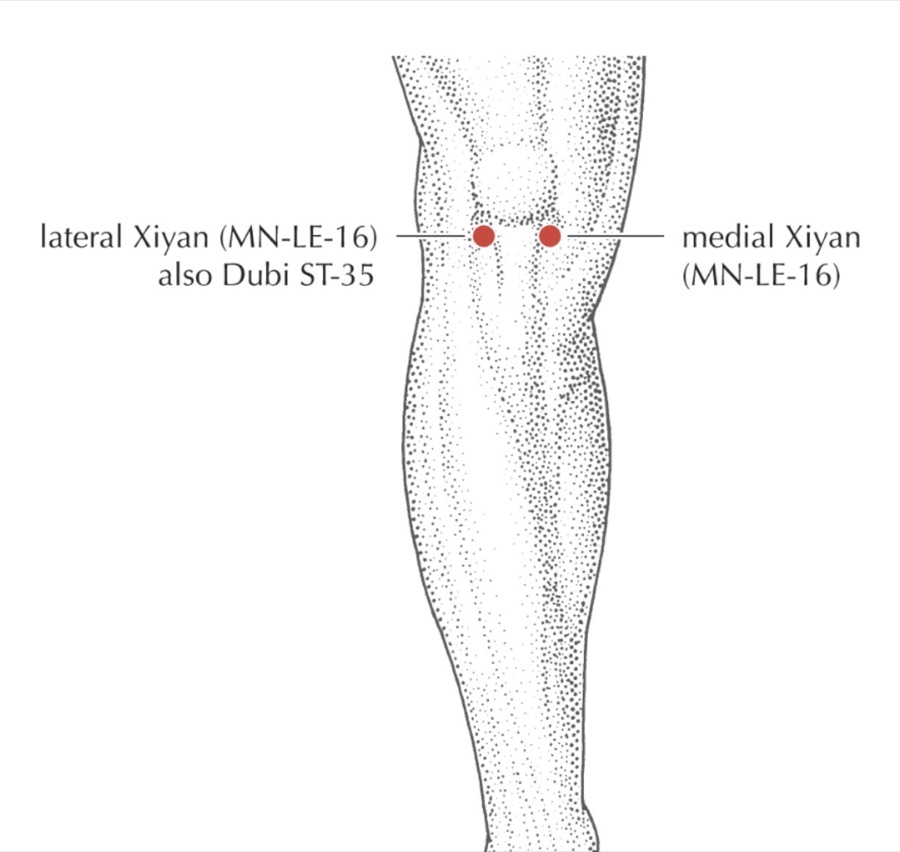
Xiyan · The 2 eyes of the knee
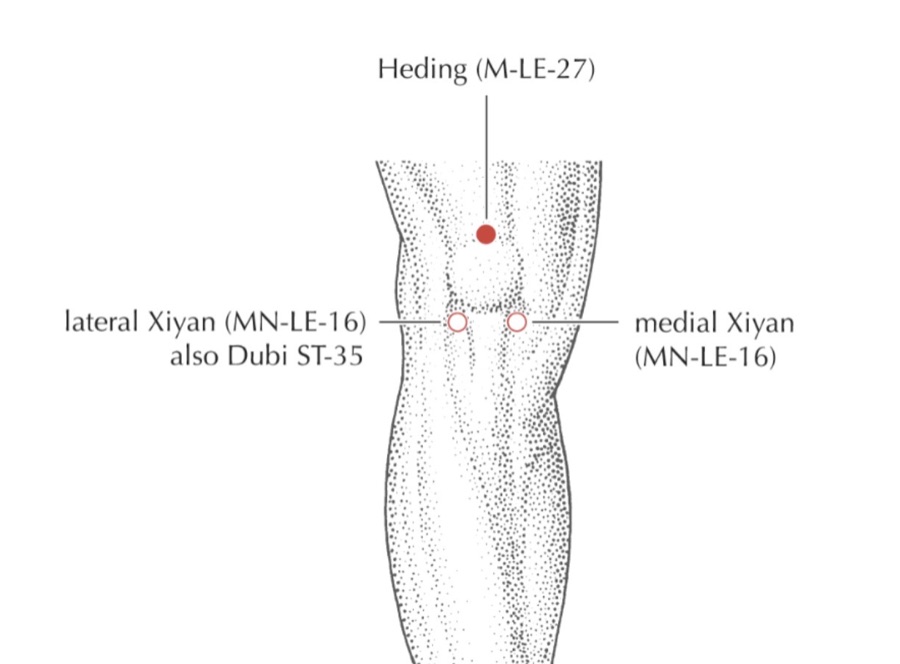
Heding · Above the kneecap
When to seek medical care
Seek urgent assessment if your knee is severely swollen, red and hot with fever, visibly deformed, or you cannot bear weight after an injury. Arrange medical evaluation for persistent, worsening, locking, or recurrent knee pain. Do not massage over an acute injury, infection, or suspected blood clot.